Why Mowing Matters in a Native Meadow
A common misconception in meadow management is that leaving vegetation completely uncut year after year produces the best habitat. In practice, unmanaged meadow on former agricultural land in Canada typically transitions toward shrub and tree cover within ten to fifteen years as woody species establish and native forbs are shaded out. Periodic mowing, applied at the right height and time, resets this succession cycle and maintains the open, herb-dominated structure that most meadow-nesting pollinators require.
The challenge is that mowing schedules optimized for aesthetics or equipment convenience often conflict directly with pollinator nesting and overwintering cycles. A cut made in early spring at low height can destroy the hollow stems where mason bees and leafcutter bees overwinter. A cut made during peak bloom in July eliminates the foraging resources that bumblebee colonies depend on during their peak worker production period.
Cut Height and Its Effects
Cut height is the most controllable variable in meadow mowing. The minimum recommended cutting height for a meadow managed for pollinators is generally cited as 10–15 cm (4–6 inches). Below this height, ground-nesting bee burrows near the soil surface are disturbed by equipment tires and blade turbulence, and the bare ground created can bake under summer sun to the point where soil is no longer suitable for nesting.
Cutting at 15–20 cm leaves enough stem material to protect the base of rosette-forming plants, allows warm-season grasses to re-sprout from their growing points, and maintains enough litter and thatch that moisture is retained around the soil surface — important for ground-nesting bee gallery construction.
Equipment note: Rotary mowers set at 15+ cm are adequate for meadow maintenance on flat ground. Flail mowers cause less soil disturbance and distribute cuttings more evenly. Avoid string trimmers for large-area mowing — they are not height-consistent and disturb far more soil surface than blade-based equipment.
Timing Windows in Canada
Mowing timing in Canadian meadow management follows the dormancy and growth cycles of both plants and insects. The two most widely used approaches are late-winter mowing and mid-summer spot control.
Late-Winter / Early Spring Mowing (March–April)
Cutting after hard frosts have ended but before new growth emerges — typically March in southern Ontario and mid-April on the Prairies — removes the previous year's standing dead material without disturbing active nesting. Most overwintering insects in hollow stems require temperatures above 10°C to become active, so a cut made at 10–12°C soil temperature carries a lower risk of disrupting them than a cut made in May when emergence is underway.
Leave a portion of the standing dead stems uncut each year. Rotating which sections are cut means that a fraction of stem overwintering sites is always preserved.
Mid-Summer Spot Control (July–August)
Spot-mowing or hand-cutting of aggressive cool-season grasses (particularly Kentucky bluegrass and smooth brome on the Prairies) when they are actively growing in midsummer exploits the difference in growing season between cool-season grasses and warm-season native species. Cool-season grasses are metabolically stressed during the July heat peak; cutting them at this point forces them to draw on root reserves while native warm-season species are unaffected.
This approach requires walking the meadow to identify which patches are grass-dominated versus forb-dominated before cutting, to avoid accidentally removing large areas of flowering forbs during peak pollinator foraging.
Patch Rotation Strategy
Dividing a meadow into three or more management zones and cycling cuts through them on a three-year rotation maintains structural diversity across the site at any given time. In year one, zone A is cut in late winter; in year two, zone B is cut; in year three, zone C is cut. Each zone spends two consecutive years with undisturbed standing structure.
This approach is particularly effective on larger sites (0.5 ha and above). On smaller urban and suburban meadow patches, a simpler two-section rotation can still provide meaningful habitat continuity.
What Not to Cut
Certain structural elements should be explicitly excluded from mowing:
- Bare or sparsely vegetated south-facing slopes: These are prime ground-nesting sites and should never be driven over with heavy equipment.
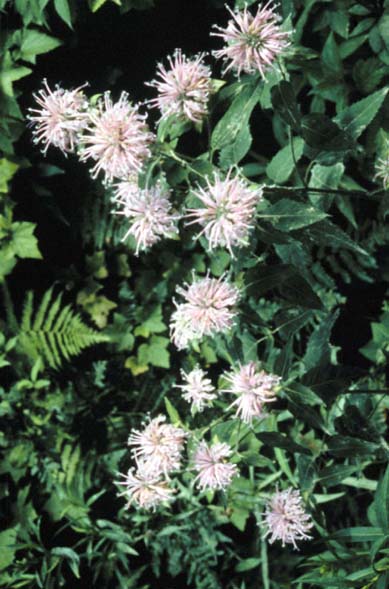
- Patches of hollow-stemmed plants: Dead stalks of Monarda fistulosa, Echinacea, and goldenrods are used for overwinter nesting by mason bees and other cavity nesters. Leave these in place until at least late spring.
- Seed heads during dispersal: Cutting before seed dispersal is complete reduces the ability of short-lived perennials and annuals to re-establish from seed.
Annual Versus Perennial Meadows
Annual wildflower mixes — commonly sold as "meadow-in-a-can" products — require completely different management. They need cutting and disturbance each fall or spring to reset soil conditions that allow annual seeds to germinate. These mixes do not produce the multi-year, perennial-dominated plant communities that support ground-nesting bees or provide overwintering habitat. This article focuses on management of perennial native meadow, which follows a different logic.